
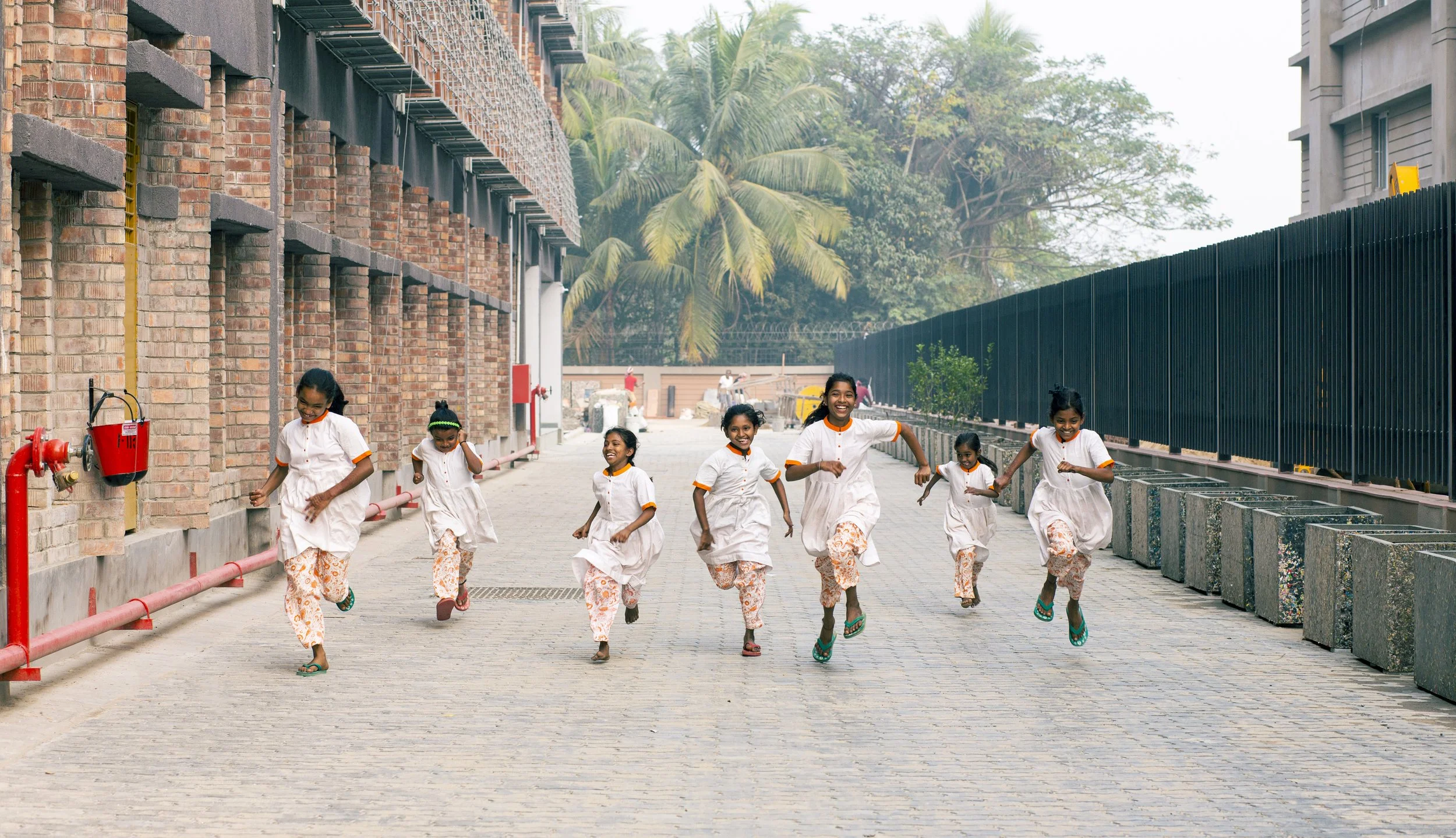
Where Girls Take Root and Rise
The Story of Adhigam Bhoomi
Adhigam Bhoomi was born from our vision to make education relevant , sustainable, and self-reliant. It’s more than a residential learning centre, it’s a movement where girls learn to lead their own lives, and then their communities.
Learning Meets Real Life
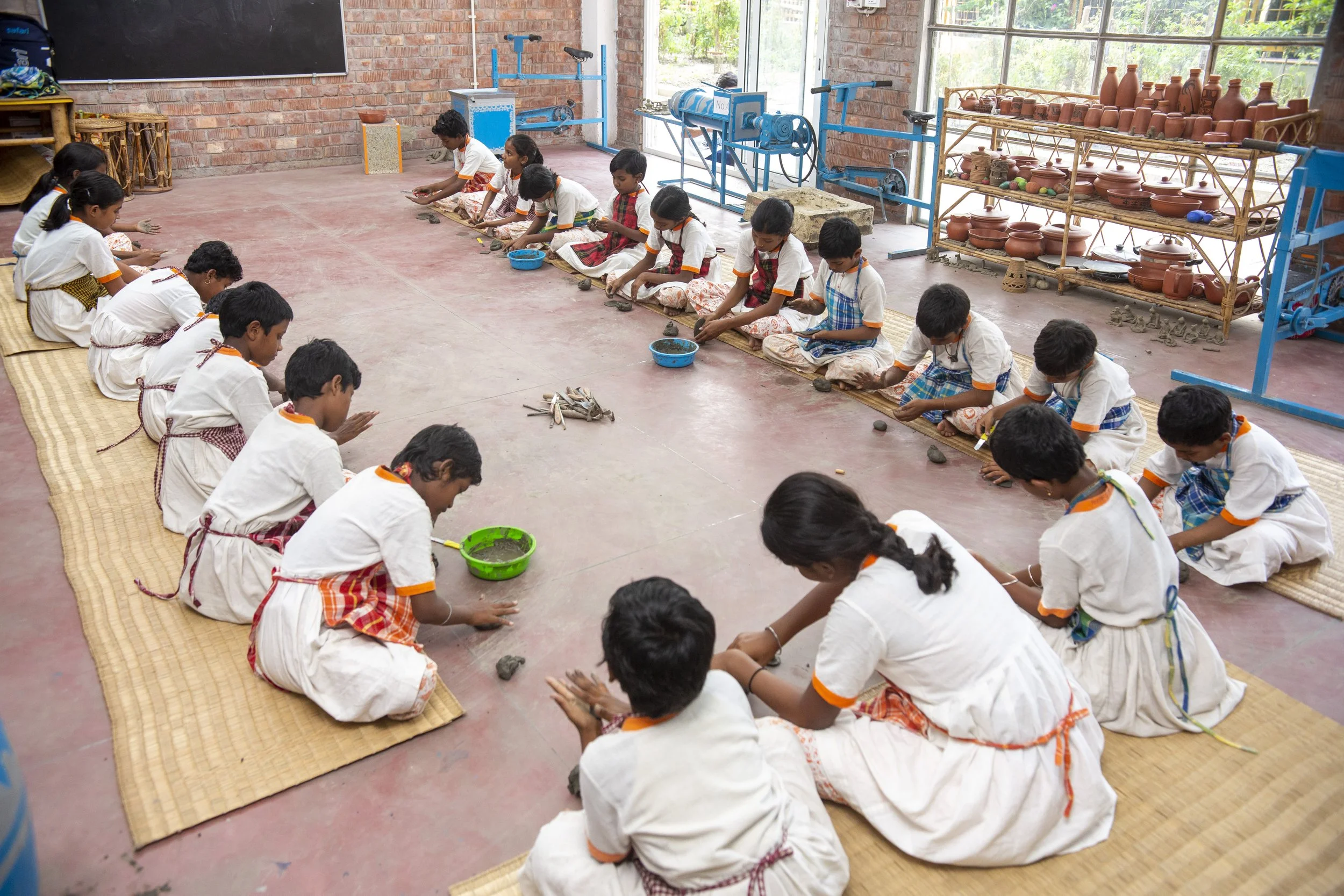
At Adhigam Bhoomi, education is designed for life beyond the classroom.
Each girl learns through a balanced mix of mainstream academics and rural skill subjects, guided by the values of Atmanirbharta and Seva.
We integrate the rural skill subjects into mainstream subjects ensuring that our curriculum fits existing school timetable & does not need additional periods.
Science, Mathematics, Social Science, History, Geography
Languages - Bengali, Hindi, English & Sanskrit
Rural Skills Curriculum
Ayurveda & Agriculture
Alternative Energy & Rural Architecture
Carpentry & Visual Arts
Boat Making & Wetland Conservation
Menstrual Hygiene & Well being
Kalaripayattu (Traditional Martial Art)
Vedanta for Mental Wellbeing
Financial Literacy & Schemes
Plumbing & Electrical
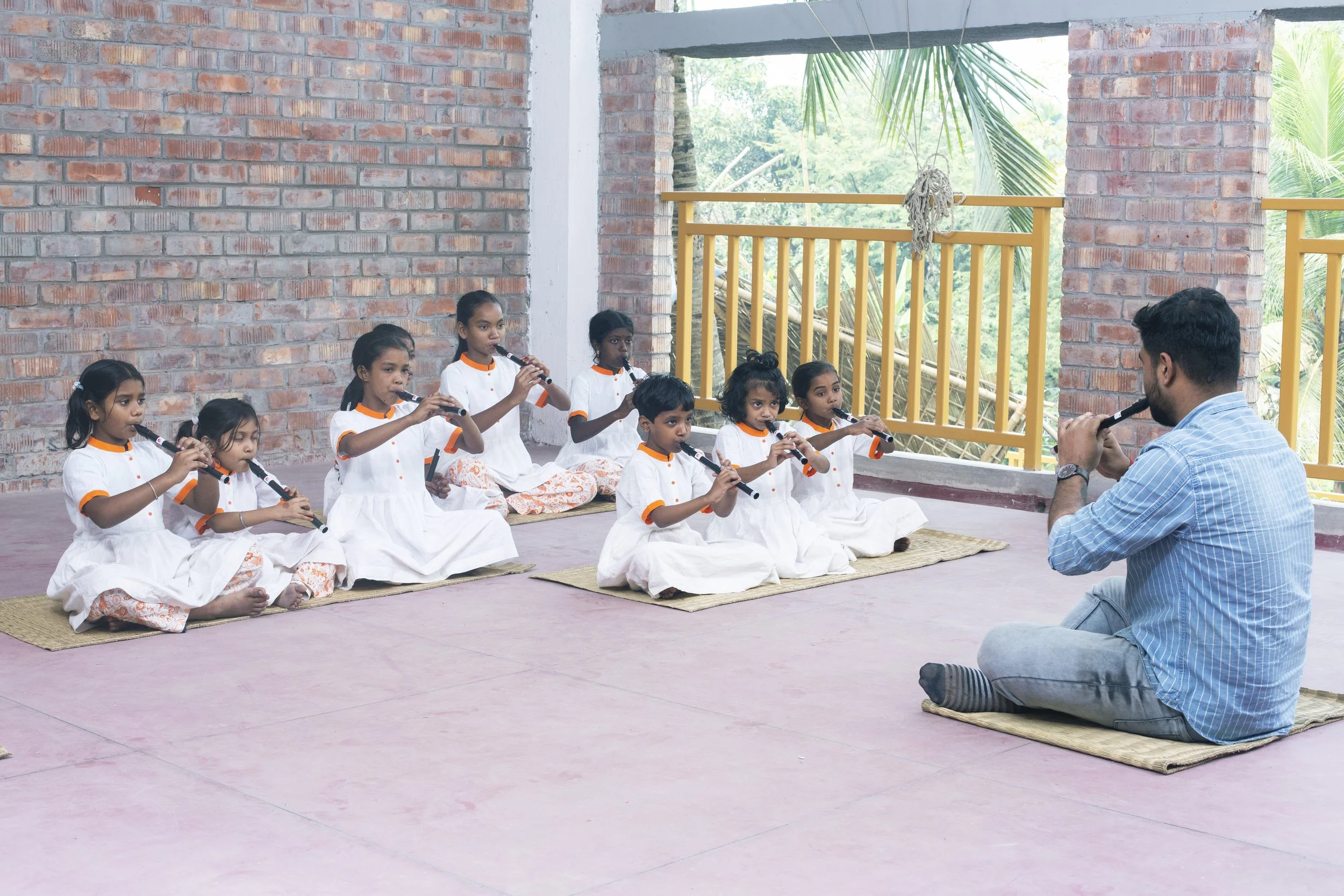
A Campus Built by Values
Adhigam Bhoomi itself is a living classroom.
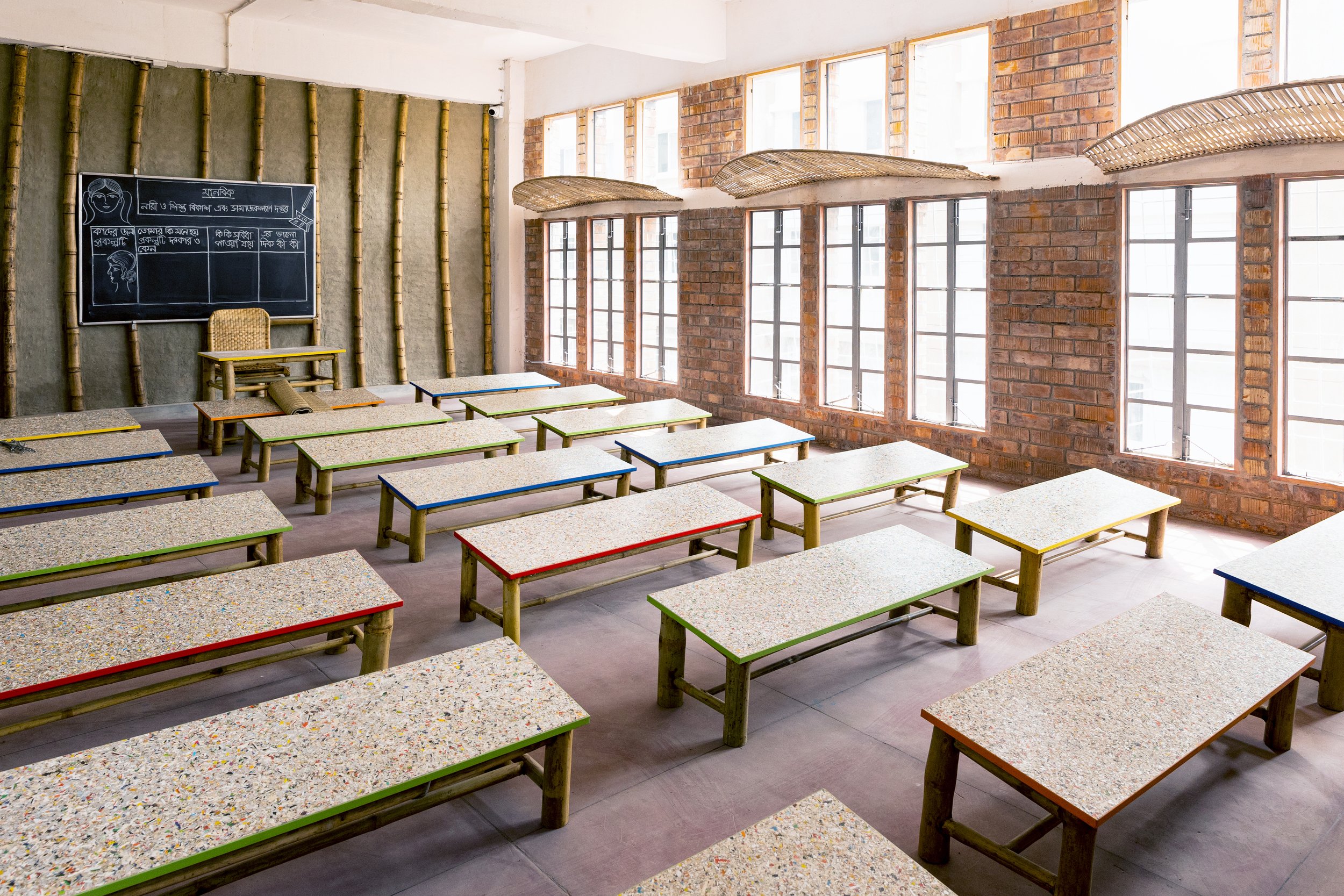
Built with bamboo, mud, and recycled materials, the campus embodies the very sustainability it teaches.
Powered by renewable energy, it reflects harmony with nature and respect for resources.
The campus design encourages curiosity, calm, and creativity. Classrooms open to light and wind, courtyards filled with music, art, and shared meals.
Making of Adhigam Bhoomi
Adhigam Bhoomi in Joka, West Bengal has been designed as a nature-inspired, climate-responsive campus, modelled on the intelligence of trees. The architecture ensures natural comfort, sustainability, and harmony with the environment through thoughtful use of materials, ventilation, and local techniques.
Tree-Inspired Design
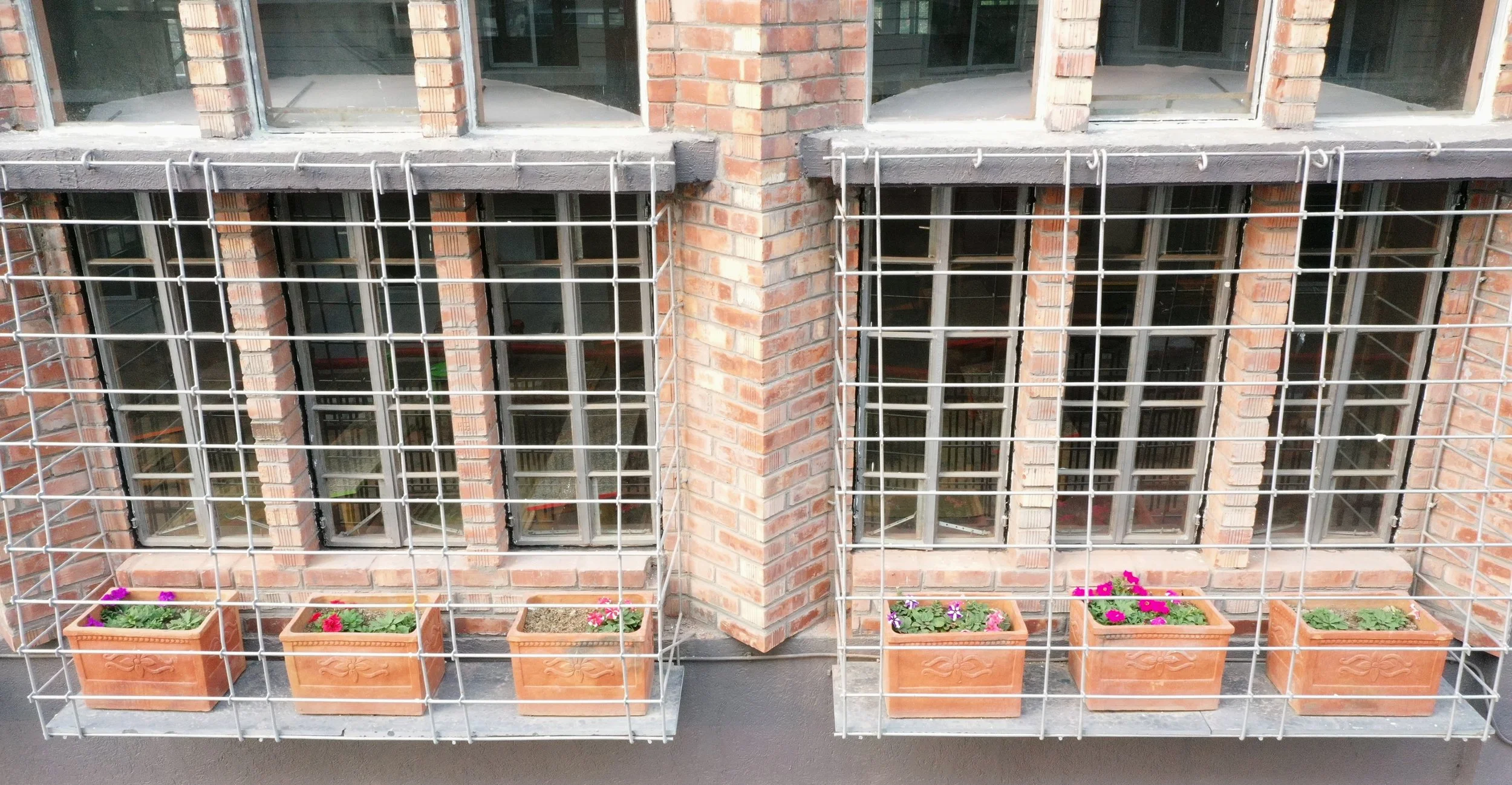
Buildings provide natural shade, allow free airflow, reduce glare, regulate temperature, and maintain clean indoor air—mirroring how trees protect and balance their surroundings
Heat Protection
Minimal East–West openings and cavity brick walls reduce heat gain. Stone sunshades on the North–South sides allow soft daylight while blocking harsh summer sun.
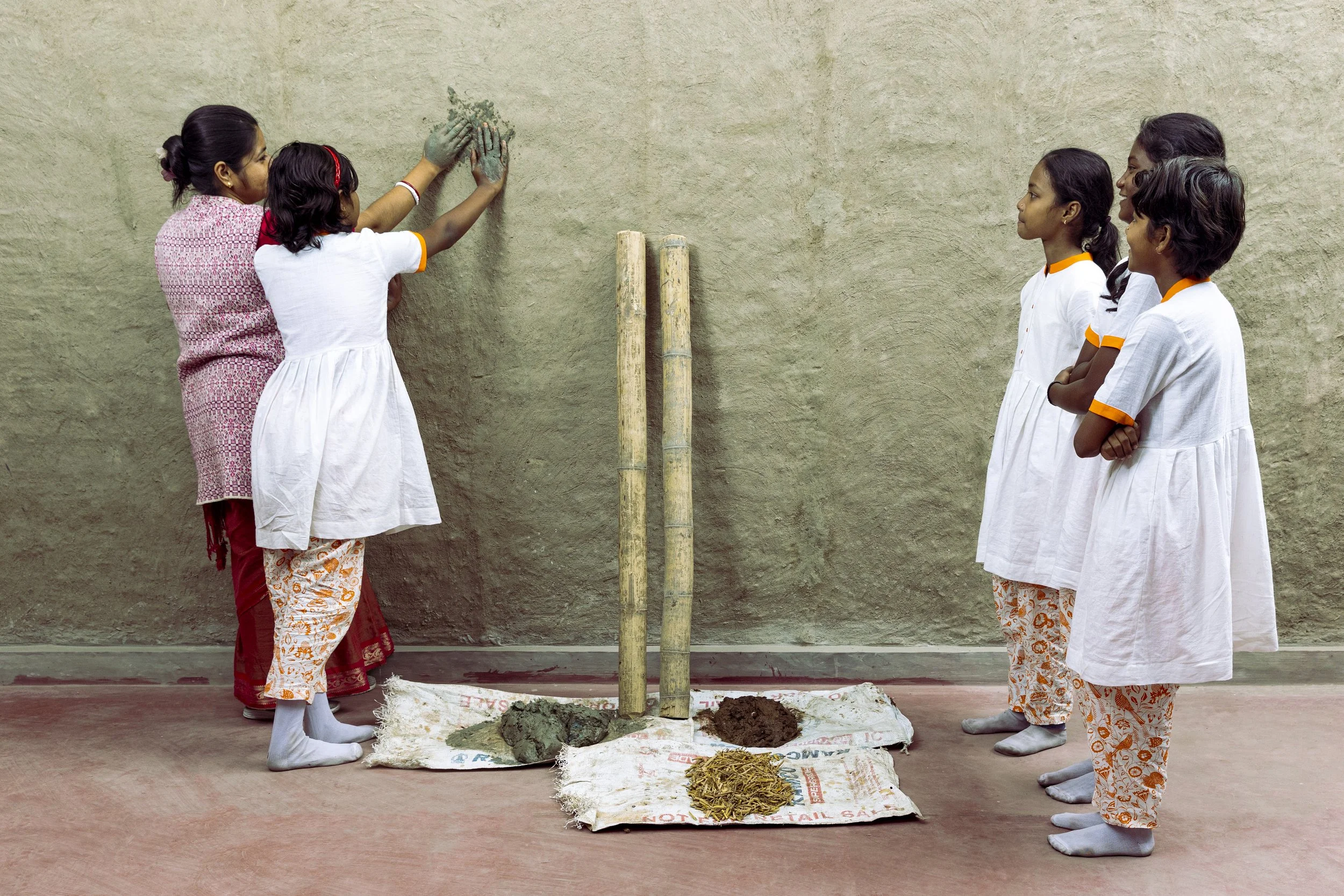
Bamboo-mud walls
These walls regulate humidity through natural moisture buffering and phase-change cooling and mud plaster absorbs sound for quieter classroom experience.
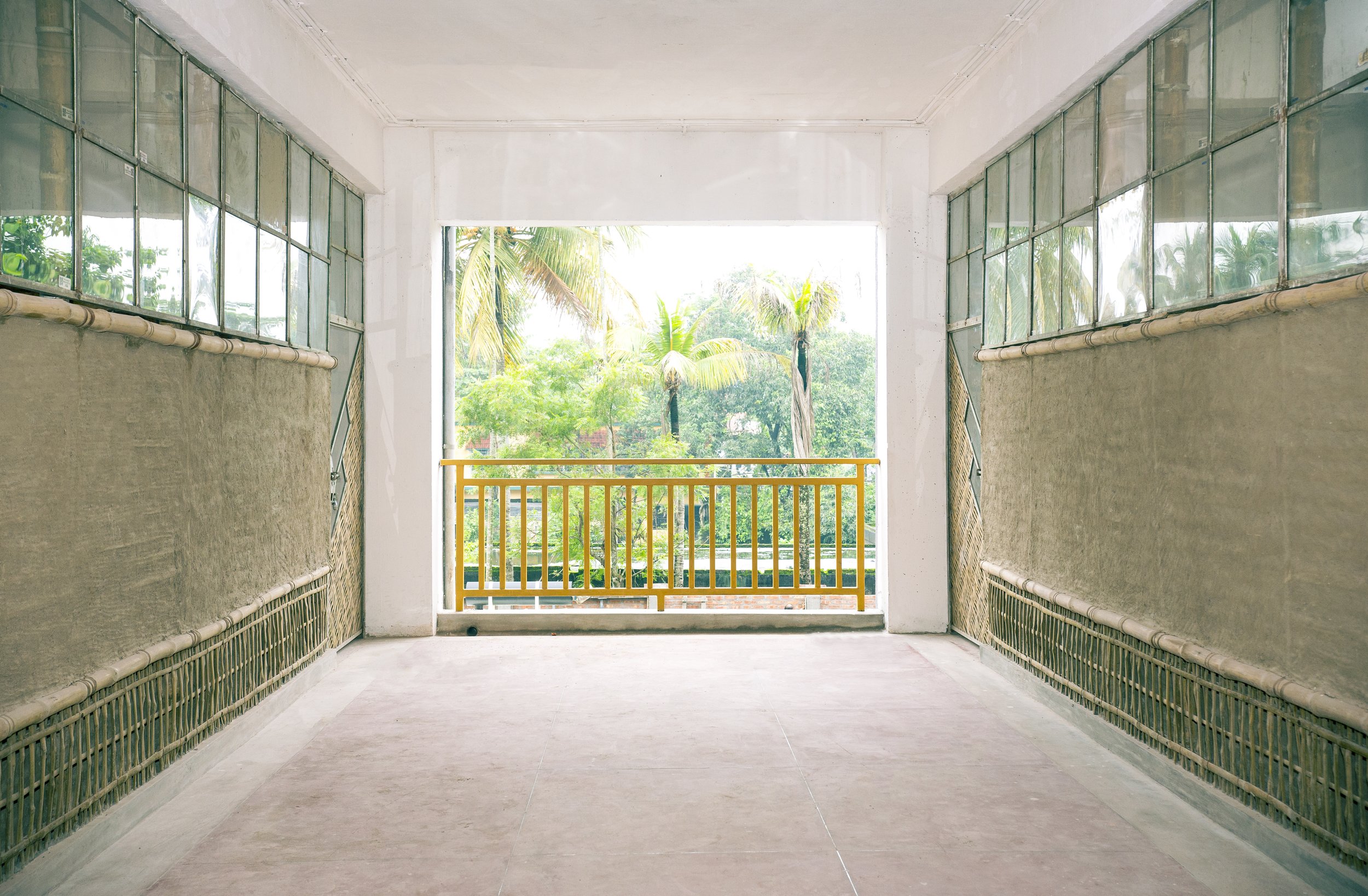
Eco-Friendly Materials
Non-toxic materials—mud, bamboo, lime, clay tiles, stone, and grass mats—ensure hygienic, breathable, and low-pollution spaces.
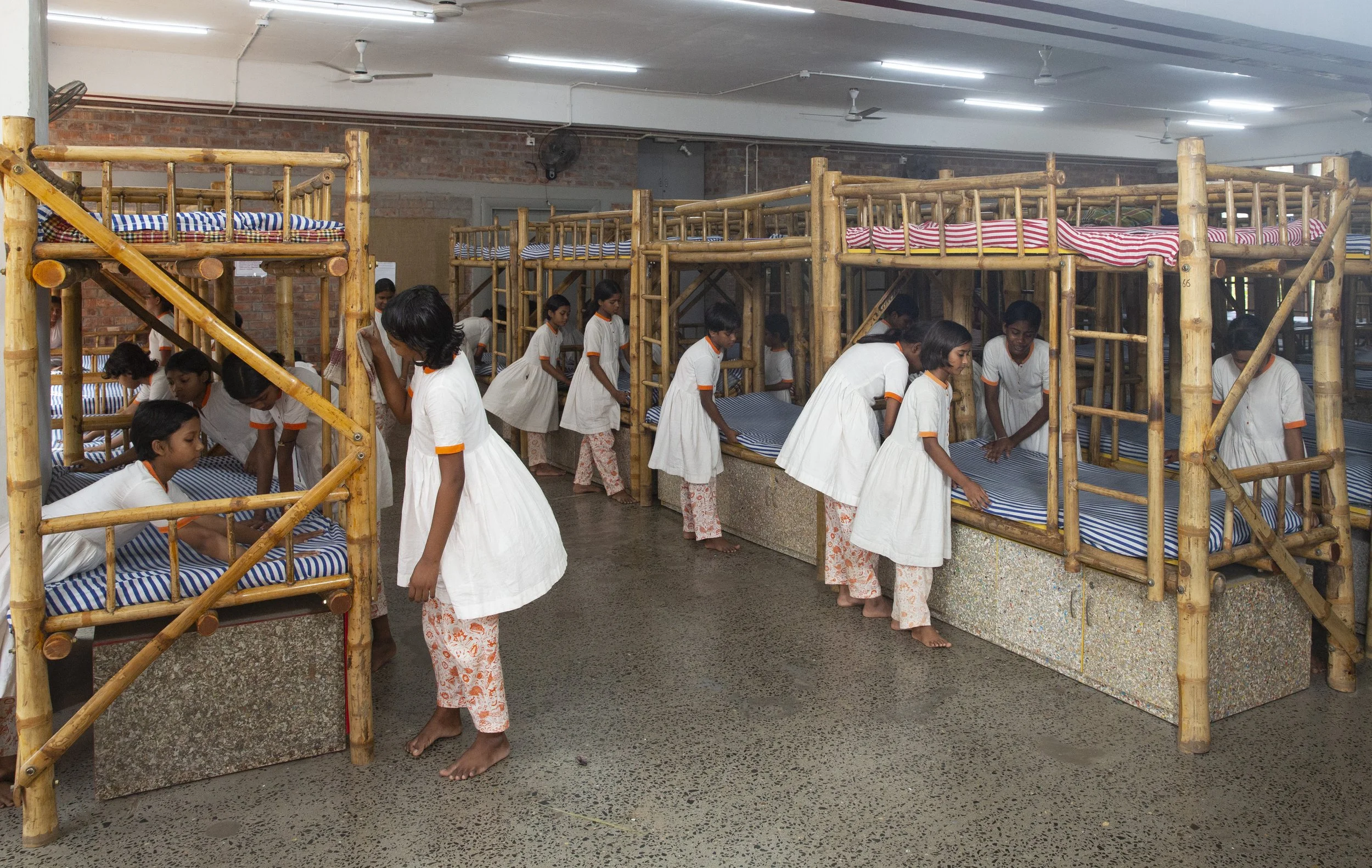
Green Footprint
6,32,200 kg of carbon mitigated by choices that make Adhigam Bhoomi a living example of the education we aim to deliver. We used polished concrete floors, recycled-board furniture and plaster-free walls to save materials.
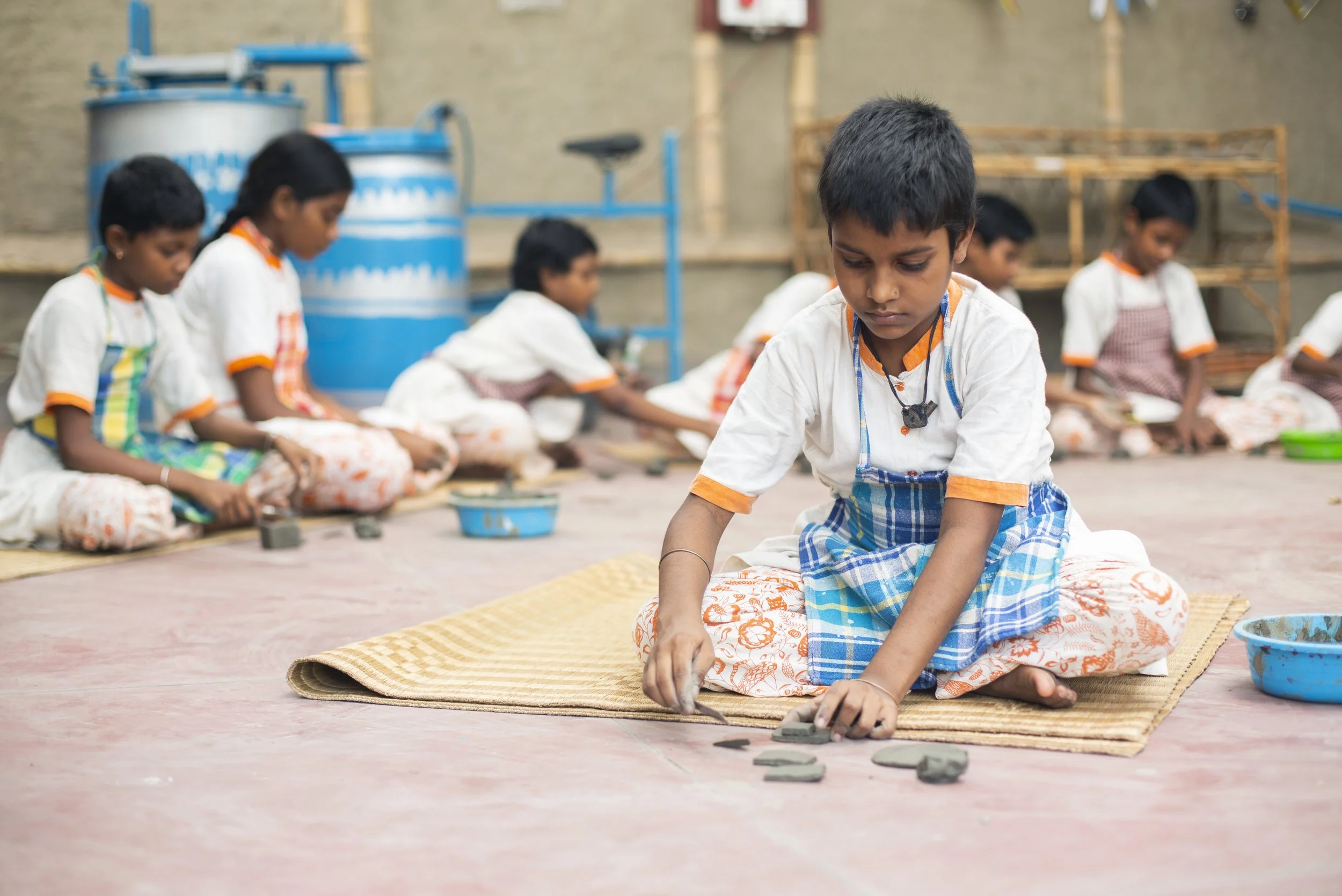
Skill-based infrastructure
Children can learn to recycle waste, create textile on looms and potter’s wheel for learning pottery.
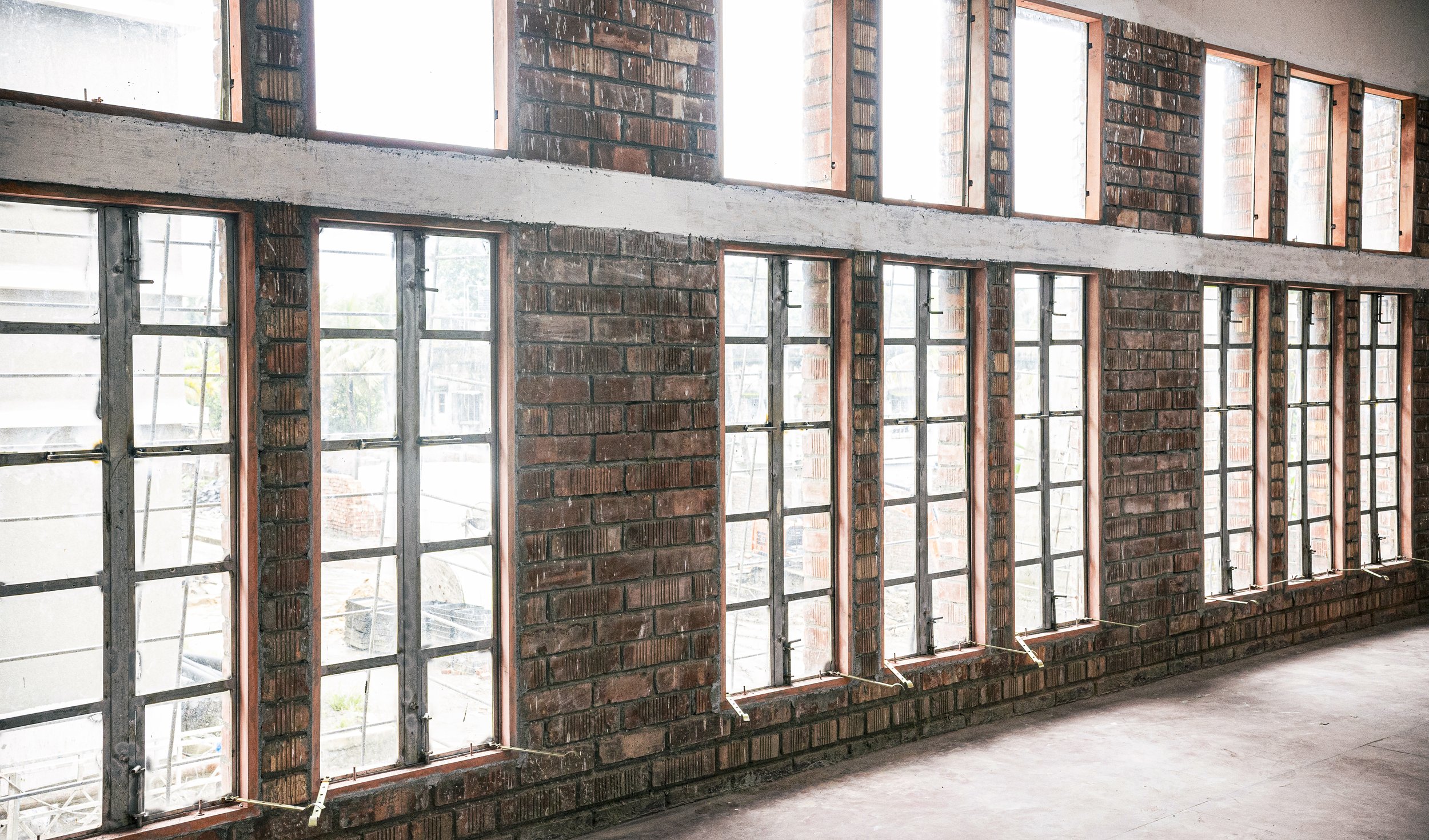
Optimised Ventilation
With 70% window coverage on North and South façades, buildings receive abundant daylight and natural cross-ventilation.
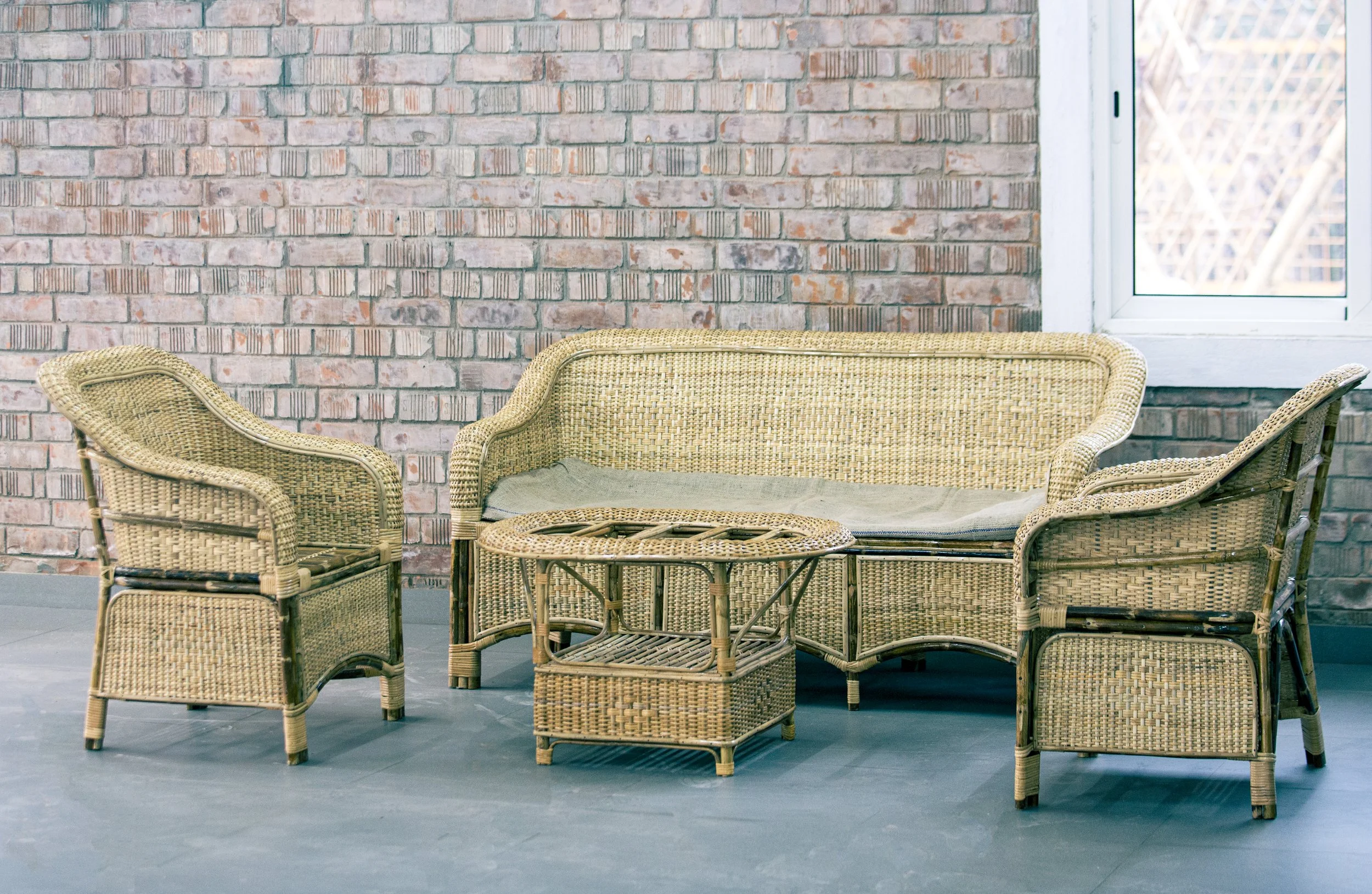
Local Techniques & Learning
Labour-intensive methods support local artisans, preserve rural skills, and provide children with exposure to sustainable practices
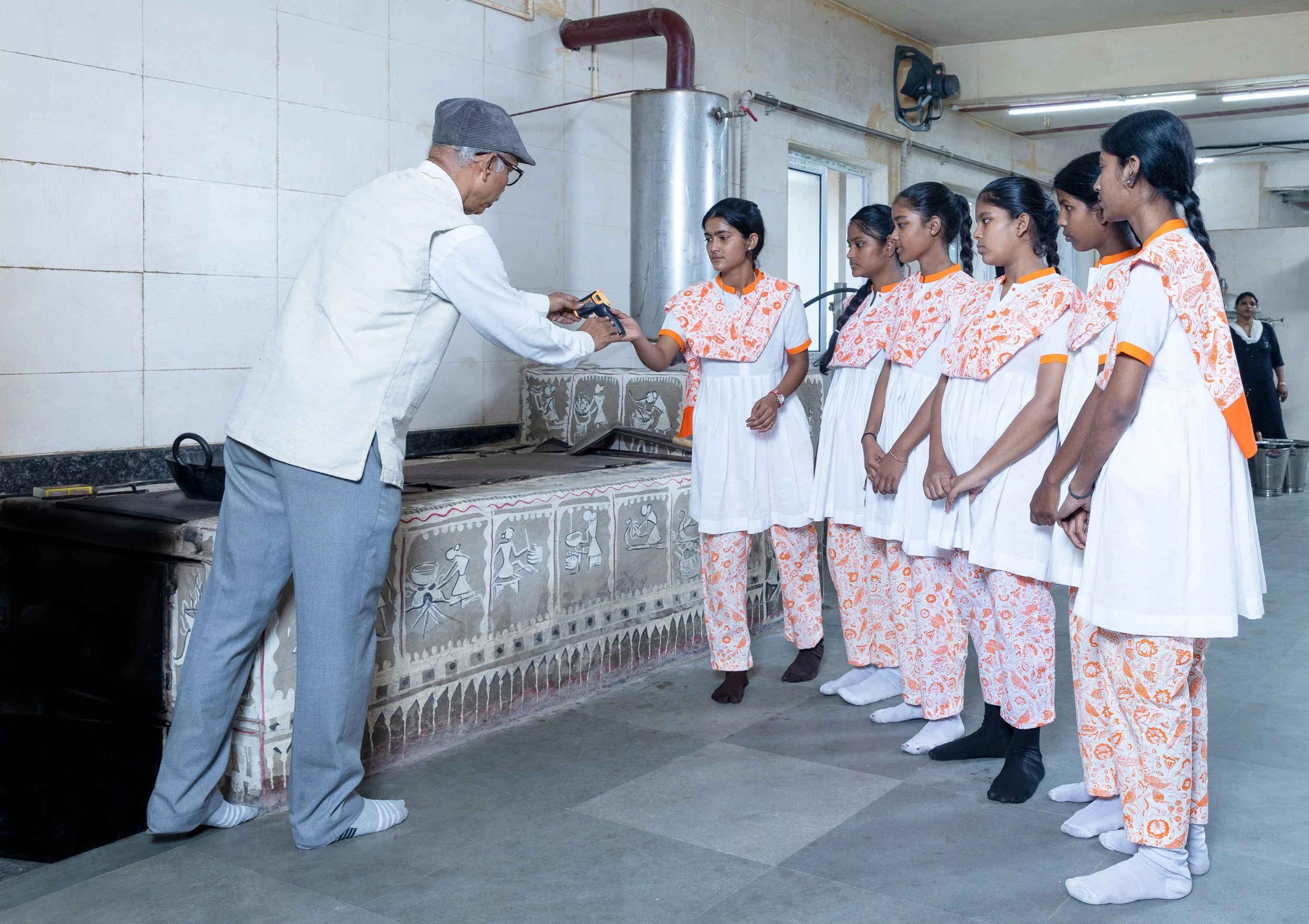
Smokeless Chulha
Using eco-friendly cooking practices enables children to appreciate the wisdom in rural practices and learn to use, maintain & make chulhas for their communities.
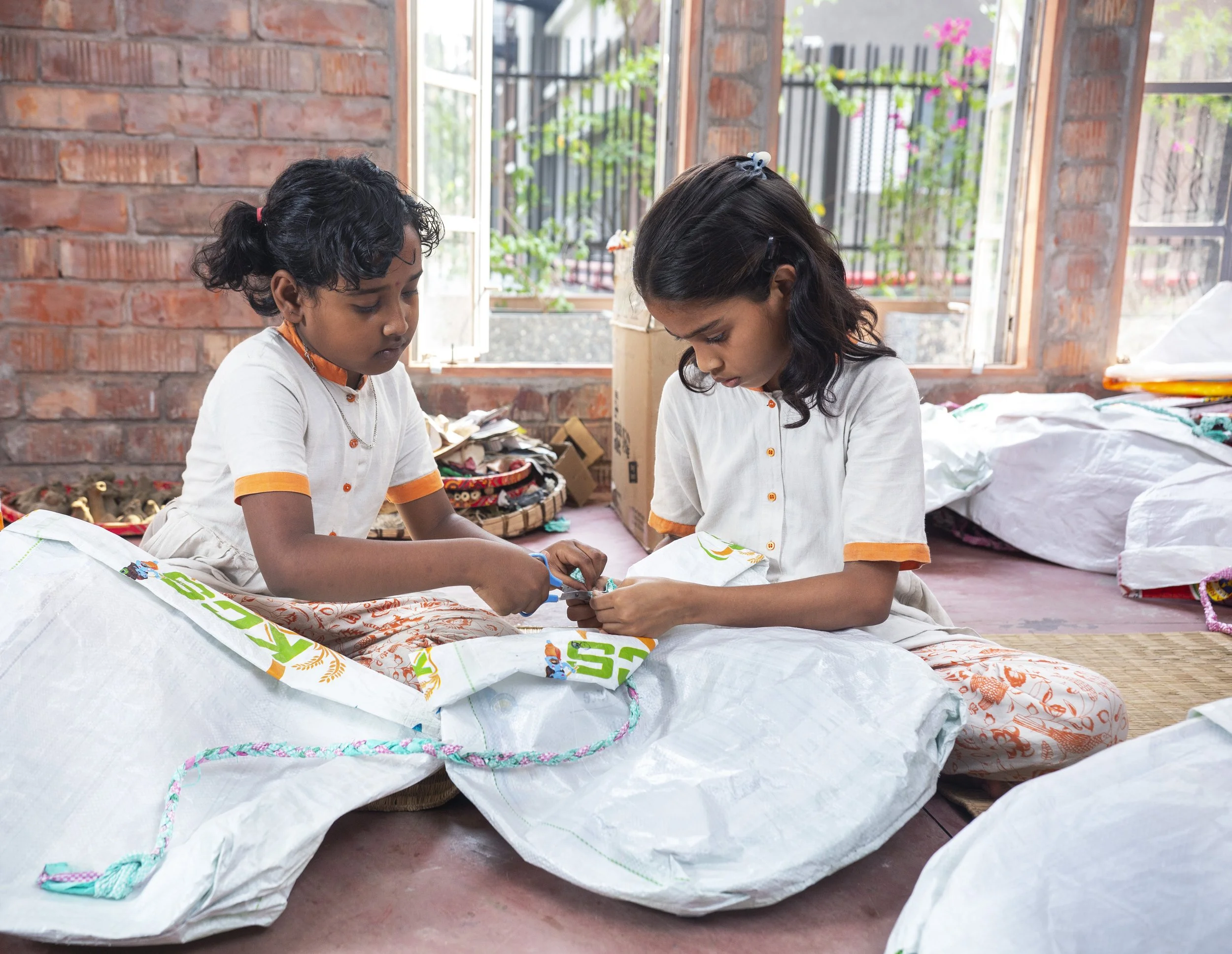
Nurturing Her Whole Self
Education here goes beyond academics.
Girls are encouraged to question, to express, to explore, supported by mentors who believe in their potential.
Each student spends 8 months on campus and 2 months in her village, where she applies what she’s learned by setting up Community Learning Centres — teaching other children, helping women’s groups, and driving micro-initiatives in health, hygiene, and livelihood.
Class 8 being the threshold for them to explore.
Learning becomes a cycle of giving — knowledge that roots itself in service.
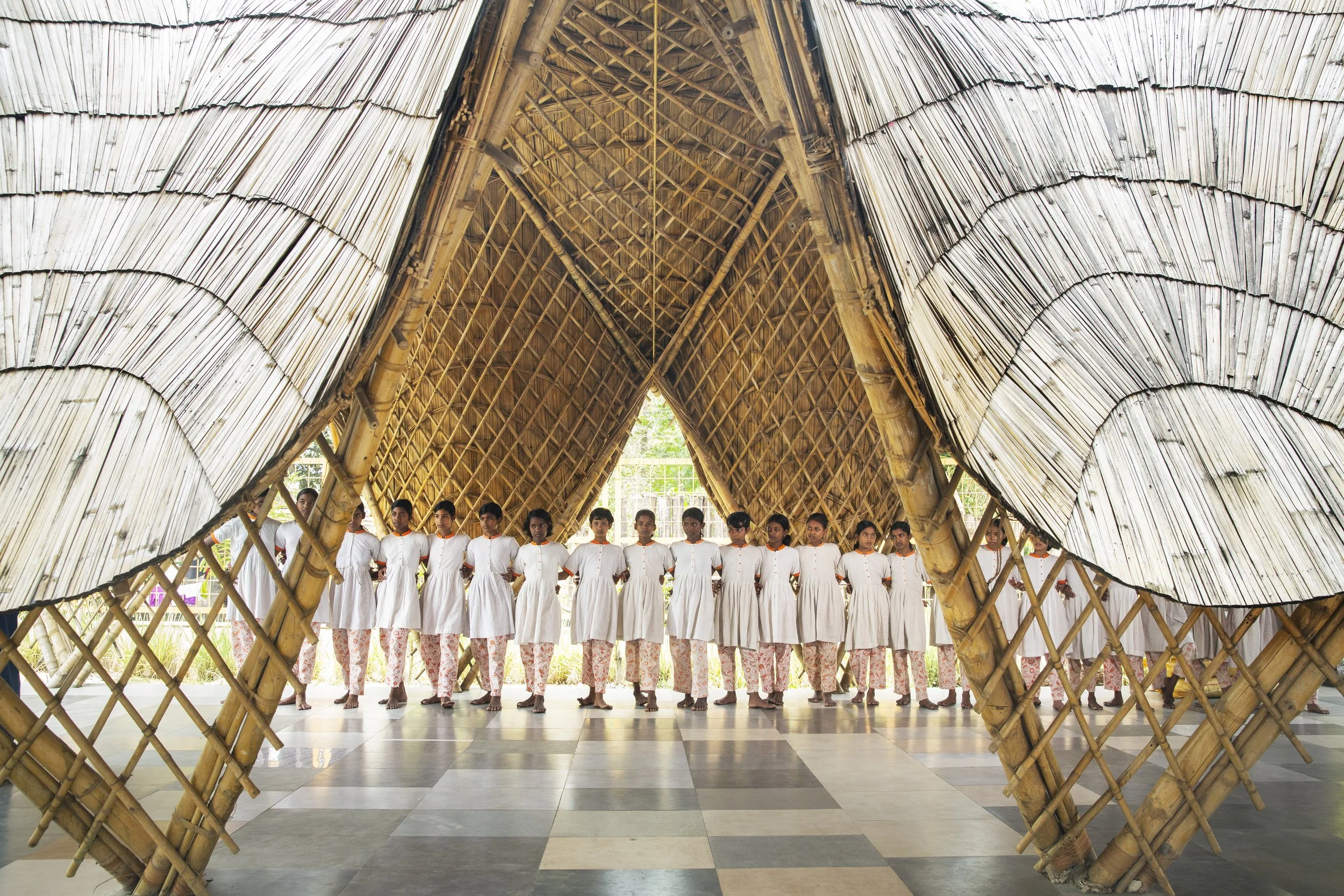
Impact So Far
1,000 girls enrolled from 7 districts of West Bengal
18 skill domains integrated with academics
We have imparted training to 28 teachers and 11 artisans.
100% girls gain practical livelihood exposure before graduation
Why It Matters
Empowering Rural Minds. Building Rural Enterprises. Fueling Rural Economies.
#RuralEntrepreneurship #RuralEconomy #NEP2020 #ViksitBharat